
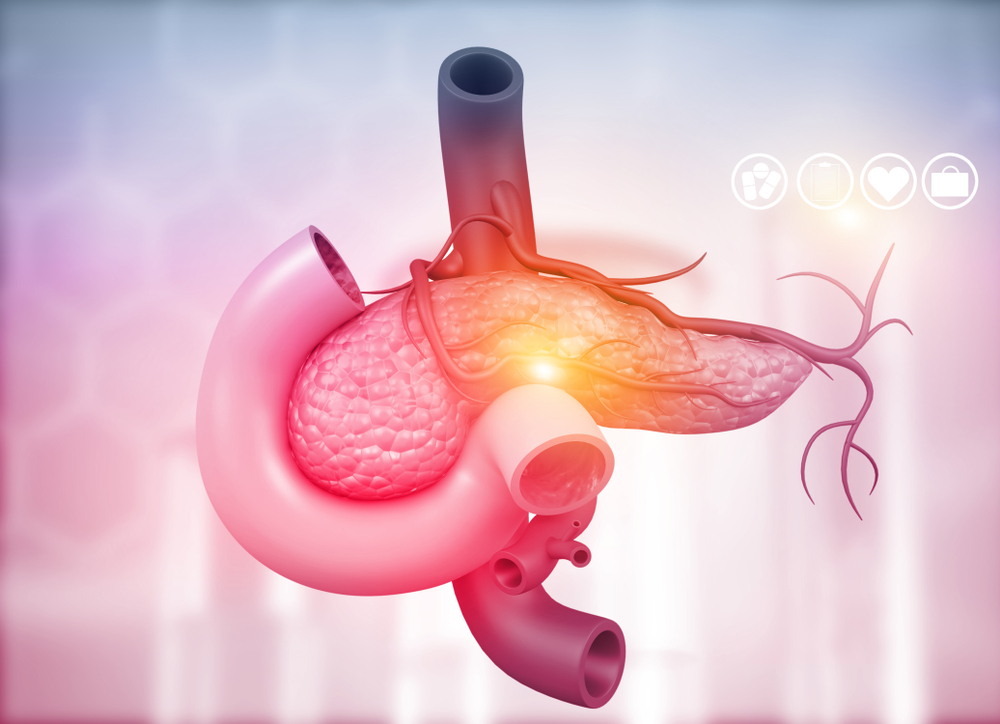
Amylase helps your body digest starch. It is an enzyme that is made in your pancreas and salivary glands, with smaller amounts made by the ovaries, fallopian tubes, intestines and lungs.
The blood test for amylase is used to help diagnose pancreatitis (inflammation of the pancreas). Amylase levels rise quickly at the beginning of a pancreatitis attack and fall after about three days.
The amylase test has been widely used for many years but a newer enzyme test, lipase, has largely replaced it. Lipase is preferred over amylase for diagnosing pancreatitis because it is more accurate. Lipase stays in the body longer and therefore provides a more reliable test result.
Also, lipase is almost entirely made by the pancreas whereas higher amylase levels can be caused by problems in various parts of the body such as salivary gland diseases, bile duct and gall bladder blockages, bowel obstructions and perforations, kidney disease and gynaecological conditions.
Chronic (long-term) pancreatitis is often associated with alcoholism. Lipase has a greater sensitivity than amylase in someone with alcoholic pancreatitis.
Amylase and lipase tests are often ordered together. Amylase is now mainly used when someone has symptoms of a salivary gland disease (because it is also made by the salivary glands).
When a doctor is investigating pancreatitis, a range of blood tests may be ordered at the same time including liver function tests, full blood count, C-reactive protein, creatinine and electrolytes, calcium and glucose.


Sample
Amylase is typically measured in a blood sample.
Any preparation?
An amylase test does not require you to fast, however if lipase testing is being done at the same time you will need to fast for that. Some medications and supplements might also need to be paused. You should tell your doctor about any medication you are taking.
Reading your test report
Your results will be presented along with those of your other tests on the same form. You will see separate columns or lines for each of these tests.
In pancreatitis, amylase levels are very high, often 5-10 times normal.
| Amylase blood test results | What they may mean |
| High amylase |
|
| Normal amylase | This does not rule out pancreatic disease. Long term (chronic) pancreatitis and alcohol induced pancreatitis can occur without affecting amylase levels. This is because amylase producing cells have been destroyed. Early stages of pancreas inflammation may not produce high levels. If testing is late, amylase levels may have returned to normal. |
| Low amylase | Rarely important. |
Reference intervals - comparing your results to the healthy population
Your results will be compared to reference intervals (sometimes called a normal range).
If your results are flagged as high or low this does not necessarily mean that anything is wrong. It depends on your personal situation.
Reference intervals for amylase vary between laboratories in Australia because they use different measurement instruments. Always check your specific laboratory’s ranges.
The choice of tests your doctor makes will be based on your medical history and symptoms. It is important that you tell them everything you think might help.
You play a central role in making sure your test results are accurate. Do everything you can to make sure the information you provide is correct and follow instructions closely.
Talk to your doctor about any medications you are taking. Find out if you need to fast or stop any particular foods or supplements. These may affect your results. Ask:
Pathology and diagnostic imaging reports can be added to your My Health Record. You and your healthcare provider can now access your results whenever and wherever needed.
Get further trustworthy health information and advice from healthdirect.