
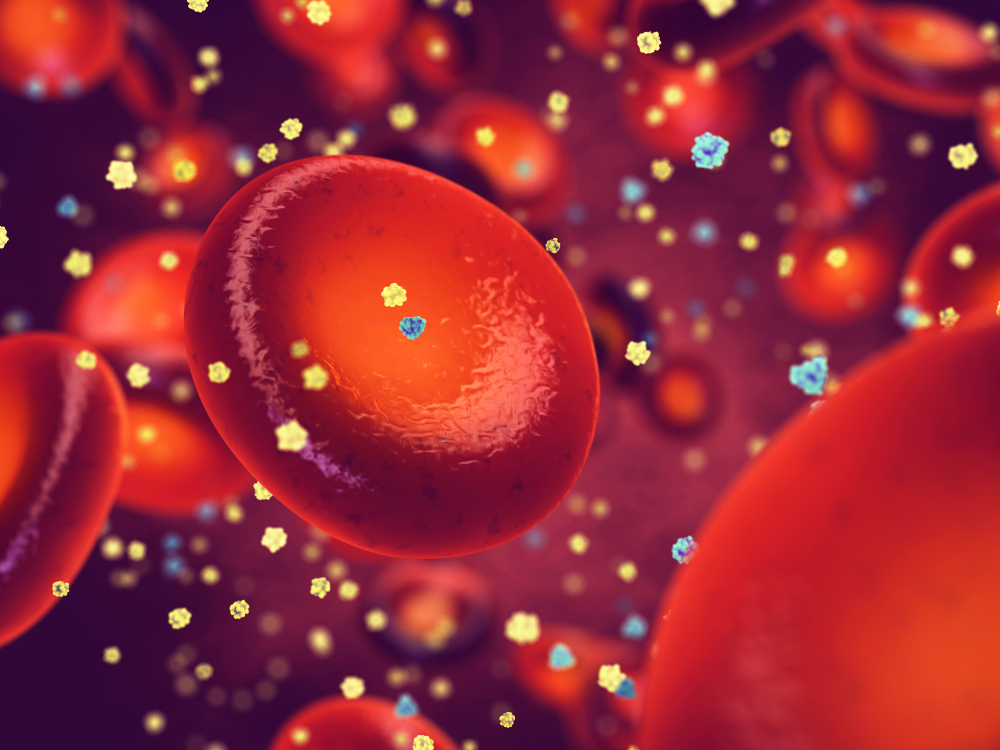
Blood plasma is the liquid part of the blood. A pale-yellow fluid, it represents about half of the content of whole blood, and it contains water, salts and proteins. Many different proteins float in the plasma. Proteins are important building blocks of all cells and tissues.

The total protein test measures two types of proteins:
Albumin helps carry many small molecules through the blood such as hormones and drugs, but its main purpose is to keep fluid within the blood vessels and stop it from leaking out.
Globulin proteins include enzymes, transport proteins and antibodies. They are important for immune function including inflammation, and blood clotting. Except for antibodies and some other immune system proteins, most globulins are also made in the liver.
The total protein test measures all proteins in the blood. The globulins fraction is estimated by a calculation, not by measuring globulins individually. The calculation subtracts the measured albumin value from the total protein to provide an estimate of the globulins.
Globulins are a mixed group of many proteins. Measuring them individually would require specialised tests. The calculated globulin gives a useful estimate. If the calculated globulin is abnormal, further tests may be used including protein electrophoresis and immunoglobulins (IgG, IgA, IgM) for more detailed information.
The total protein test is performed along with other tests. It gives a general snapshot of health and is commonly used to help assess:
Sample
Blood.
Any preparation?
None.
The information from protein tests can provide clues that a disease or condition is affecting protein production or a loss of protein, but the results usually do not provide a definitive diagnosis. Instead, additional follow-up tests are needed to investigate the cause. If total protein test results are not in what is considered to be the healthy range, further tests may be needed.
Reading your test report
Your results will be presented along with those of your other tests on the same form. You will see separate columns or lines for each of these tests.
Protein tests alone do not diagnose health conditions, but they can provide important information to help pinpoint the problem. Once a diagnosis has been confirmed, they are often used to monitor your condition and to make sure that any treatment you are having is working.
Reference intervals - comparing your results to the healthy population
Your results will be compared to reference intervals (sometimes called a normal range).
If your results are flagged as high or low this does not necessarily mean that anything is wrong. It depends on your personal situation.
| Reference interval for total protein | |
| Adults | 60- 80 g/L |
| The reference interval for total protein is a harmonised reference interval. Some laboratories are in the process of adopting these harmonised intervals so it is possible that the intervals shown on the report of your results for this test may be slightly different until harmonisation is fully adopted. | |
| Total protein is measured as grams per litre. | |
Prolonged application of a tourniquet or standing during blood collection can increase total protein levels.
Many medications may affect total protein levels, including oestrogens, steroids and oral contraceptives. Tell your healthcare practitioner all the prescription or over-the-counter medications, supplements or illicit substances you may be taking.
The choice of tests your doctor makes will be based on your medical history and symptoms. It is important that you tell them everything you think might help.
You play a central role in making sure your test results are accurate. Do everything you can to make sure the information you provide is correct and follow instructions closely.
Talk to your doctor about any medications you are taking. Find out if you need to fast or stop any particular foods or supplements. These may affect your results. Ask:
Pathology and diagnostic imaging reports can be added to your My Health Record. You and your healthcare provider can now access your results whenever and wherever needed.
Get further trustworthy health information and advice from healthdirect.