
Summary
What is Cystatin C?
Cystatin C is a waste product continuously made by almost all your body’s cells as part of daily life. After it enters the bloodstream, the body does not reuse it and it is filtered out of your blood by your kidneys.
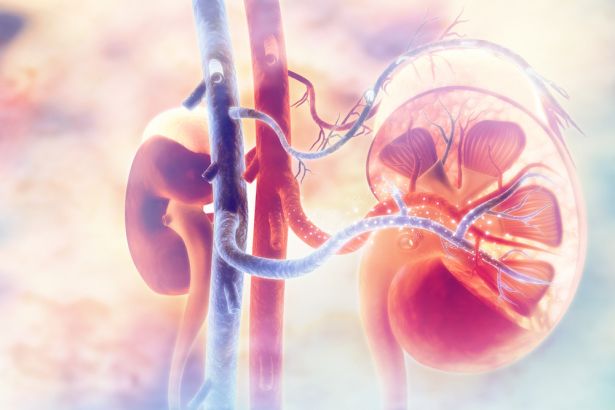
You have a pair of kidneys located just at the bottom of your ribcage on either side of your spine. Inside are about a million tiny blood filtering units called the glomerulus. These filter your blood and remove wastes and excess fluid from your body, which are disposed of in your urine. If the kidneys are not working properly, waste products can build up.
Cystatin C is broken down by your kidneys and there should be only very low levels in your blood if your kidneys are working properly.


Why get tested?
Measuring levels of cystatin C in your blood can show how well your kidneys are working.
Cystatin C testing is used as an alternative to creatinine and creatinine clearance testing which have been used for many decades to assess kidney function. Creatinine is another substance filtered by your kidneys. It comes from the normal wear and tear of your muscles. It is a by-product of a chemical called creatine that is found in muscle cells and is used to produce the energy needed to make muscles flex. Creatine breaks down naturally over time and becomes creatinine. The more muscle someone has, the more creatinine they produce.
Unlike creatinine, cystatin C levels are not affected by muscle mass. This makes the test especially useful in people with low muscle mass such as children, the elderly and those who are frail as well as people who have large muscle mass such as body builders.
Like creatinine, the results of the cystatin C test can be used as part of a calculation called the glomerular filtration rate (GFR). The GFR is an estimate of how much blood your kidneys filter each minute.
The eGFR is a calculation that uses blood creatinine or cystatin C (or both) together with your age and gender. It is considered the most accurate estimate of kidney function.
When your doctor orders a cystatin C test, the laboratory will most likely automatically calculate:
Cystatin C is a newer, more refined test that has been shown to improve accuracy, especially when used together with creatinine. However, cystatin C is not used routinely because it requires sophisticated testing techniques and it is performed by only a few laboratories. It is not rebated by Medicare and is billed privately. Having the test can involve an out-of-pocket fee.
Nevertheless, under certain conditions a specialist doctor (such as a renal physician or endocrinologist) may request the test:
Having the test
Sample
Blood.
Any preparation?
None.
Your results
Reading your test report
Your results will be presented along with those of your other tests on the same form. You will see separate columns or lines for each of these tests.
Cystatin C results are used with creatinine results to give a more accurate estimate of kidney filtration than either test alone.
Both are used to calculate the amount of blood filtered by your kidneys per minute. This is called the eGFR or the estimated glomerular filtration rate. eGFR is the main screening and monitoring test for kidney function. For more on how the eGFR is calculated see eGFR.
Reference intervals - comparing your results to the healthy population
Your results will be compared to reference intervals (sometimes called a normal range).
If your results are flagged as high or low this does not necessarily mean that anything is wrong. It depends on your personal situation.
Reference intervals for cystatin C
Reference intervals for cystatin C vary slightly between laboratories in Australia because they use different measurement instruments. Always check your specific laboratory’s ranges.
| Cystatin C reference intervals: Cystatin C levels vary with age, sex, and body composition | |
| Adult | 0.5 - 1.0 mg/L |
| Infants and children 1 – 18 years | 0.5 - 1.3 mg/L |
| Cystatin C is measured as milligrams per litre. | |
Questions to ask your doctor
The choice of tests your doctor makes will be based on your medical history and symptoms. It is important that you tell them everything you think might help.
You play a central role in making sure your test results are accurate. Do everything you can to make sure the information you provide is correct and follow instructions closely.
Talk to your doctor about any medications you are taking. Find out if you need to fast or stop any particular foods or supplements. These may affect your results. Ask:
More information
Pathology and diagnostic imaging reports can be added to your My Health Record. You and your healthcare provider can now access your results whenever and wherever needed.
Get further trustworthy health information and advice from healthdirect.
What is Pathology Tests Explained?
Pathology Tests Explained (PTEx) is a not-for profit group managed by a consortium of Australasian medical and scientific organisations.
With up-to-date, evidence-based information about pathology tests it is a leading trusted source for consumers.
Information is prepared and reviewed by practising pathologists and scientists and is entirely free of any commercial influence.