
Summary
What is being tested?
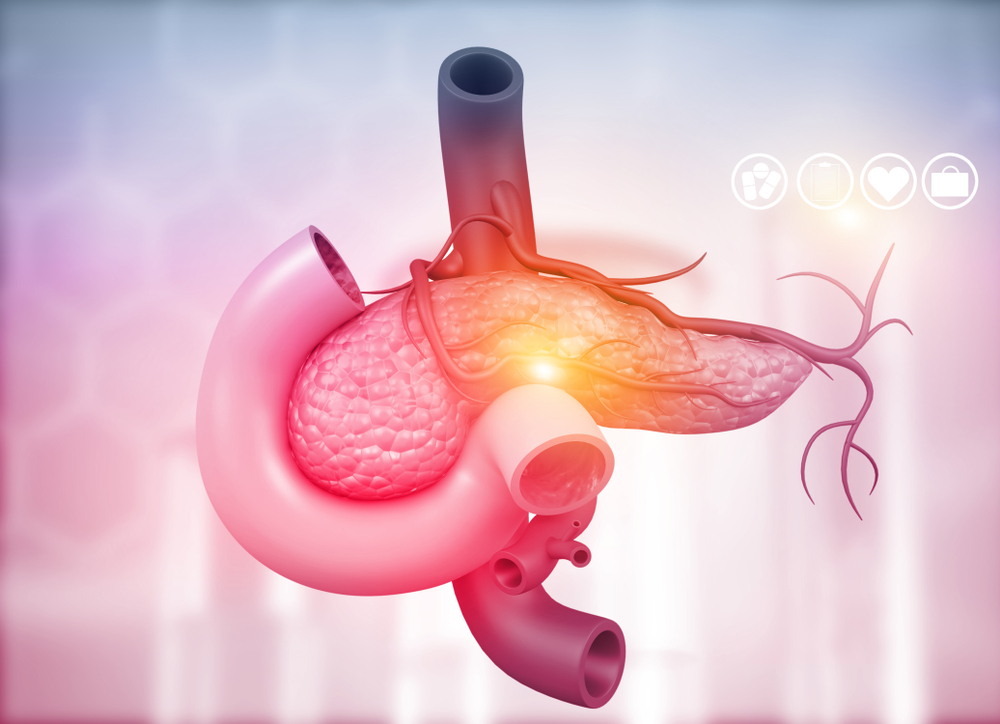
Pancreatic elastase faeces is a stool test that helps check how well your pancreas is making digestive enzymes. Digestive enzymes are made by the body (mainly in the pancreas, stomach and small intestine) to break down food into small molecules so it can be absorbed and used for energy, growth and repair.
Elastase is one of these enzymes. It is made by the pancreas and released into the small intestine to help break down proteins. Unlike many other enzymes, elastase passes through the intestines mostly unchanged. It can be measured reliably in a stool sample which makes it useful as a test.
The test is mainly used to investigate exocrine pancreatic insufficiency (EPI).
The pancreas has two main parts: exocrine and endocrine tissue. The exocrine part produces digestive enzymes, including elastase. If the exocrine pancreas is not working properly, it does not make enough elastase and other digestive enzymes. As a result, the level of elastase in the stool is reduced. EPI occurs when there are not enough enzymes released and transported to the small intestine for proper food digestion and absorption of nutrients.


Why get tested?
EPI typically occurs as a result of ongoing and worsening pancreatic damage. Any condition that blocks the pancreatic ducts or damages or destroys the cells that produce elastase can cause pancreatic insufficiency.
EPI is mostly caused by pancreatitis (inflammation of the pancreas) either after repeated episodes of acute pancreatitis or as a result of chronic (ongoing) pancreatitis. It can also occur with pancreatic cancer.
In children, EPI is most commonly caused by cystic fibrosis (CF). CF happens when a person inherits two faulty CFTR genes (one from each parent). The CFTR gene controls how salt and water move in cells, including the cells in the pancreas. This helps keep digestive juices thin so they can flow properly.
People who have just one faulty gene are called carriers and usually do not have CF. However, some carriers may have slightly reduced CFTR function. This increases the risk of pancreatitis
Shwachman–Diamond syndrome (SDS) is the second most common inherited cause of EPI after CF. All children with SDS have some degree of EPI from infancy.
Other possible causes of EPI include coeliac disease, Crohn disease, autoimmune pancreatitis, Zollinger–Ellison syndrome, and types of surgery that reduce pancreatic or digestive function.
Having the test
Sample
Stool (faeces).
Watery diarrhoea can sometimes falsely lower the result.
Any preparation?
You do not need to fast for this test, and most medications do not need to be stopped. The test is not affected by pancreatic enzyme supplements - you usually don’t need to stop them. Your doctor can advise you if you have concerns.
Your results
A normal amount of elastase will be present in the stool of a healthy person.
A low amount of elastase may mean that the person has EPI.
The test does not diagnose the cause of EPI, only whether enzyme production is low and whether further testing is needed.
If your results are normal but your symptoms continue and your doctors suspect that you have other EPI stool tests for faecal fat, immunoreactive trypsin and trypsin faeces or blood tests for amylase and lipase may be ordered to look at other aspects of pancreas and digestive function.
| Pancreatic elastase faeces results | |
| Result | What this means |
| More than 200 µg/g | Normal |
| Between 100 and 200 µg/g | Moderate pancreatic exocrine insufficiency |
| Less than 100 µg/g | Severe pancreatic exocrine insufficiency |
| Pancreatic elastase faeces is measured as µg/g or micrograms per gram. | |
Questions to ask your doctor
The choice of tests your doctor makes will be based on your medical history and symptoms. It is important that you tell them everything you think might help.
You play a central role in making sure your test results are accurate. Do everything you can to make sure the information you provide is correct and follow instructions closely.
Talk to your doctor about any medications you are taking. Find out if you need to fast or stop any particular foods or supplements. These may affect your results. Ask:
More information
Pathology and diagnostic imaging reports can be added to your My Health Record. You and your healthcare provider can now access your results whenever and wherever needed.
Get further trustworthy health information and advice from healthdirect.
What is Pathology Tests Explained?
Pathology Tests Explained (PTEx) is a not-for profit group managed by a consortium of Australasian medical and scientific organisations.
With up-to-date, evidence-based information about pathology tests it is a leading trusted source for consumers.
Information is prepared and reviewed by practising pathologists and scientists and is entirely free of any commercial influence.